Home홈 › Treatments치료 안내Health Column건강 칼럼 › Plantar Fasciitis족저근막염
Plantar Fasciitis (Heel Pain): Korean-Medicine Treatment족저근막염(발뒤꿈치 통증)의 한방 치료
October 22, 2026 · Tianjin Acupuncture2026년 10월 22일 · 천진 한의원
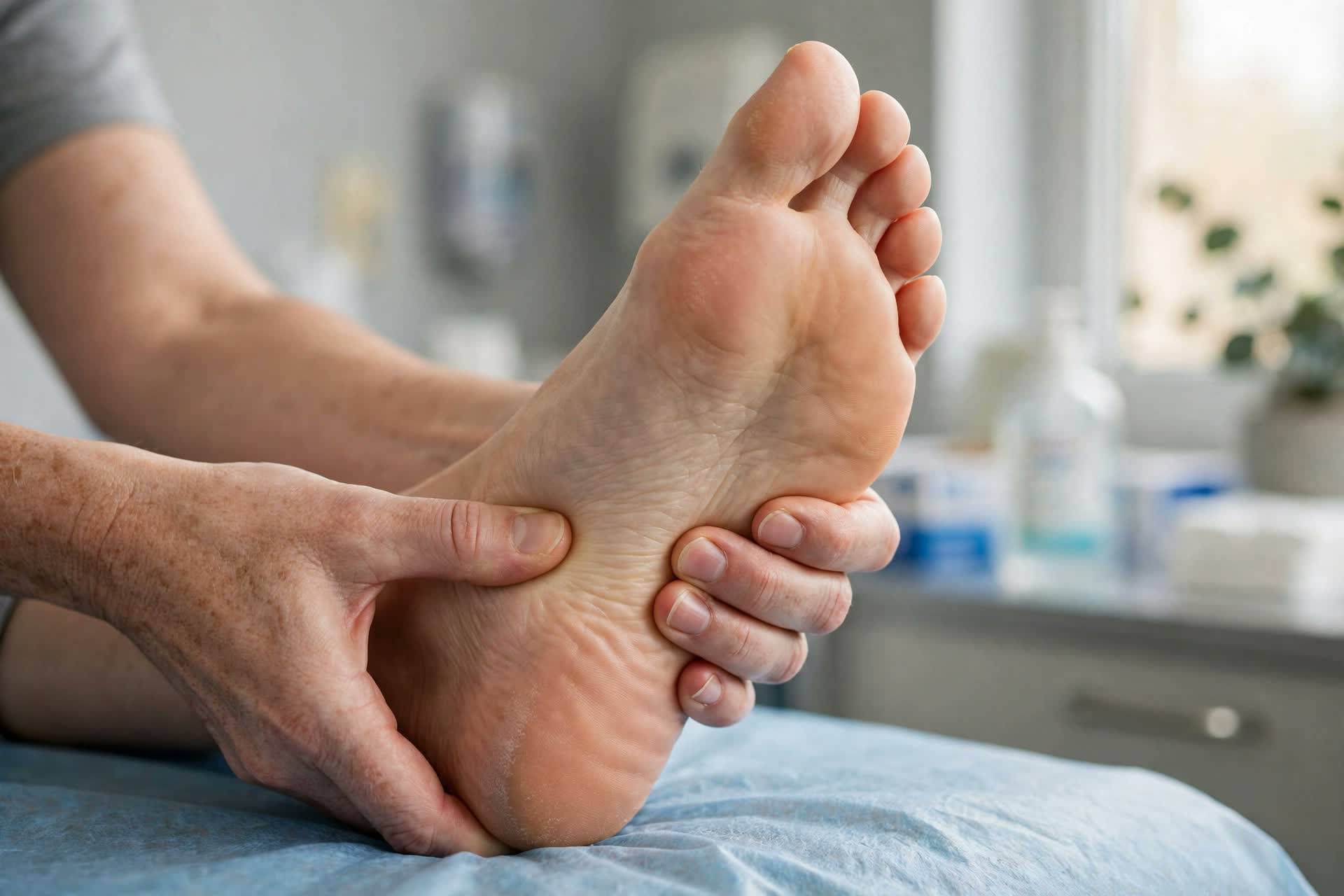
The plantar fascia is a thick, strong band of tissue that runs from the heel bone to the front of the sole (the base of the toes). It supports the arch of the foot and absorbs the impact placed on the foot when walking. Plantar fasciitis is a condition in which repeated micro-damage and inflammation in this band cause pain.족저근막은 발뒤꿈치뼈에서 발바닥 앞쪽(발가락 기저부)까지 이어지는 두껍고 강한 섬유띠로, 발의 아치를 받치고 걸을 때 발에 가해지는 충격을 흡수하는 중요한 조직입니다. 이 족저근막에 반복적인 미세 손상과 염증이 생겨 통증을 일으키는 질환이 족저근막염입니다.
Plantar fasciitis is one of the most common causes of sole pain. If the pain continues, your walking posture changes and the strain can spread to the knees, hips, and lower back, so early care matters.족저근막염은 발바닥 통증의 가장 흔한 원인 중 하나입니다. 통증이 지속되면 걷는 자세가 흐트러지고 무릎·고관절·허리까지 부담이 이어질 수 있어 초기에 관리하는 것이 중요합니다.
Key Symptoms증상 특징
The most characteristic symptom is a sharp, stabbing pain on the inner heel when you take your first step in the morning. The first few steps after sitting for a long time are also painful; the pain eases somewhat as you keep walking, but worsens again after walking or standing for a long time. Pressing the inner heel is tender, and on bad days walking far is difficult and the sole feels stiff.가장 특징적인 증상은 아침에 일어나 첫발을 디딜 때 뒤꿈치 안쪽에 찌르는 듯한 심한 통증입니다. 오래 앉아 있다가 일어날 때도 첫 몇 걸음에서 통증이 심하고, 조금 걷다 보면 다소 줄어들지만, 오래 걷거나 서 있은 뒤에는 다시 심해집니다. 뒤꿈치 안쪽을 누르면 압통이 있고, 통증이 심한 날은 오래 걷기 어렵고 발바닥이 뻣뻣하게 느껴집니다.
Causes원인
Plantar fasciitis develops as repeated strain accumulates on the sole: standing or walking a lot, a sudden increase in exercise, or exercising on hard floors. Foot structure such as flat feet or high arches, tight calf muscles and Achilles tendon, and weight gain can also contribute. Shoes with very low heels or no cushioning, and wearing high heels for long periods, increase the load on the sole.족저근막염은 발바닥에 반복되는 부담이 쌓여 생깁니다. 오래 서 있거나 많이 걷는 생활, 갑작스러운 운동량 증가, 딱딱한 바닥에서의 운동이 대표적입니다. 평발이나 아치가 높은 요족 같은 발 구조, 종아리 근육과 아킬레스건의 유연성 부족, 체중 증가도 원인이 됩니다. 굽이 지나치게 낮거나 쿠션이 없는 신발, 하이힐의 장시간 착용도 발바닥 부담을 키웁니다.
Korean-Medicine Treatment한방 치료
Korean-medicine treatment aims both to calm the inflammation and pain of the plantar fascia and to help the damaged tissue recover and prevent recurrence. Acupuncture is applied to tense areas of the heel and sole and to related acupoints to relieve pain, promote qi and blood circulation, and support tissue recovery. Electroacupuncture adds mild electrical stimulation to the needles to enhance pain relief and relax muscles and ligaments, while cupping improves circulation around the calves and sole to release tight muscles.한방에서는 족저근막의 염증과 통증을 가라앉히는 것과 함께, 손상된 조직의 회복과 재발 방지를 함께 목표로 치료합니다. 침 치료는 뒤꿈치와 발바닥의 긴장된 부위와 관련 경혈에 침을 놓아 통증을 완화하고 기혈 순환을 도와 조직 회복에 활용됩니다. 전기침 치료는 침에 약한 전기자극을 더해 통증 완화와 근육·인대 이완 효과를 높이고, 부항 치료는 종아리와 발바닥 주변의 순환을 도와 뭉친 근육을 풀어 줍니다.
Herbal medicine is prescribed according to each person's constitution and condition — tonifying qi and blood, strengthening sinews and bones, and removing blood stasis and phlegm-dampness — to support the foot's recovery and help reduce recurrence. For cases that improve slowly with conventional conservative care such as anti-inflammatory medication, physical therapy, or orthotics, Korean-medicine treatment that combines pain relief with tissue recovery and lifestyle correction can help. Treatment duration and degree of improvement vary by individual; if pain persists for several months, occurs at night, or comes with swelling and heat, a precise examination is needed to rule out other conditions such as stress fracture or tarsal tunnel syndrome.한약 치료는 개인의 체질과 상태에 따라 기혈을 보하고 근골을 강화하며 어혈과 습담을 제거하는 방향으로 처방하여, 발의 회복력을 높이고 재발을 줄이는 데 도움을 줄 수 있습니다. 서양의학의 소염제·물리치료·보조기 등 보존적 치료로도 호전이 더딘 경우, 통증 경감과 함께 조직 회복과 생활 습관 교정을 병행하는 한방 치료가 도움이 될 수 있습니다. 다만 치료 기간과 호전 정도는 개인차가 있으며, 수개월 이상 통증이 지속되거나 밤에도 통증이 있고 발이 붓고 열감이 동반되는 경우에는 피로골절, 족근관 증후군 등 다른 질환과의 감별을 위해 정밀 검사가 필요합니다.
Prevention and Daily Care예방과 생활 관리
Before getting out of bed in the morning, massage your sole and gently pull your toes back with your hand to stretch the plantar fascia. Regular calf stretching helps keep the Achilles tendon and calf muscles flexible. When pain is present, cold packs with ice or a cold wet towel (15–20 minutes) can help relieve symptoms. Wear well-fitting shoes with enough cushioning, and avoid very low-heeled shoes, flat shoes, and long hours in high heels. On days when pain is severe, rest rather than pushing through long walks, and managing your weight also helps reduce the load on your soles.아침에 일어나 침대에서 내리기 전 발바닥을 문지르고 발가락을 손으로 당겨 족저근막을 가볍게 스트레칭해 주세요. 종아리 스트레칭을 꾸준히 하면 아킬레스건과 종아리 근육의 유연성 유지에 도움이 됩니다. 통증이 있는 시기에는 얼음이나 차가운 물수건을 이용한 냉찜질(15~20분)이 증상 완화에 도움이 될 수 있습니다. 발에 잘 맞고 쿠션이 충분한 신발을 신고, 굽이 지나치게 낮은 신발이나 플랫슈즈, 하이힐의 장시간 착용은 피하세요. 통증이 심한 날은 무리하게 걷지 말고 충분히 쉬는 것이 좋고, 체중 관리도 발바닥 부담을 줄이는 데 중요합니다.
Sharp Heel Pain With Your First Morning Step?아침 첫발마다 뒤꿈치가 찌릿하신가요?
Call us today to schedule your appointment.오늘 전화로 예약하세요.