Home홈 › Health Column건강 칼럼 › Dam-eum (Phlegm-Fluid)담음
What Is Dam-eum (Phlegm-Fluid)? A Korean-Medicine Explanation담음(痰飮)이란 무엇인가
November 5, 2026 · Tianjin Acupuncture2026년 11월 5일 · 천진 한의원
What Is Dam-eum?담음이란
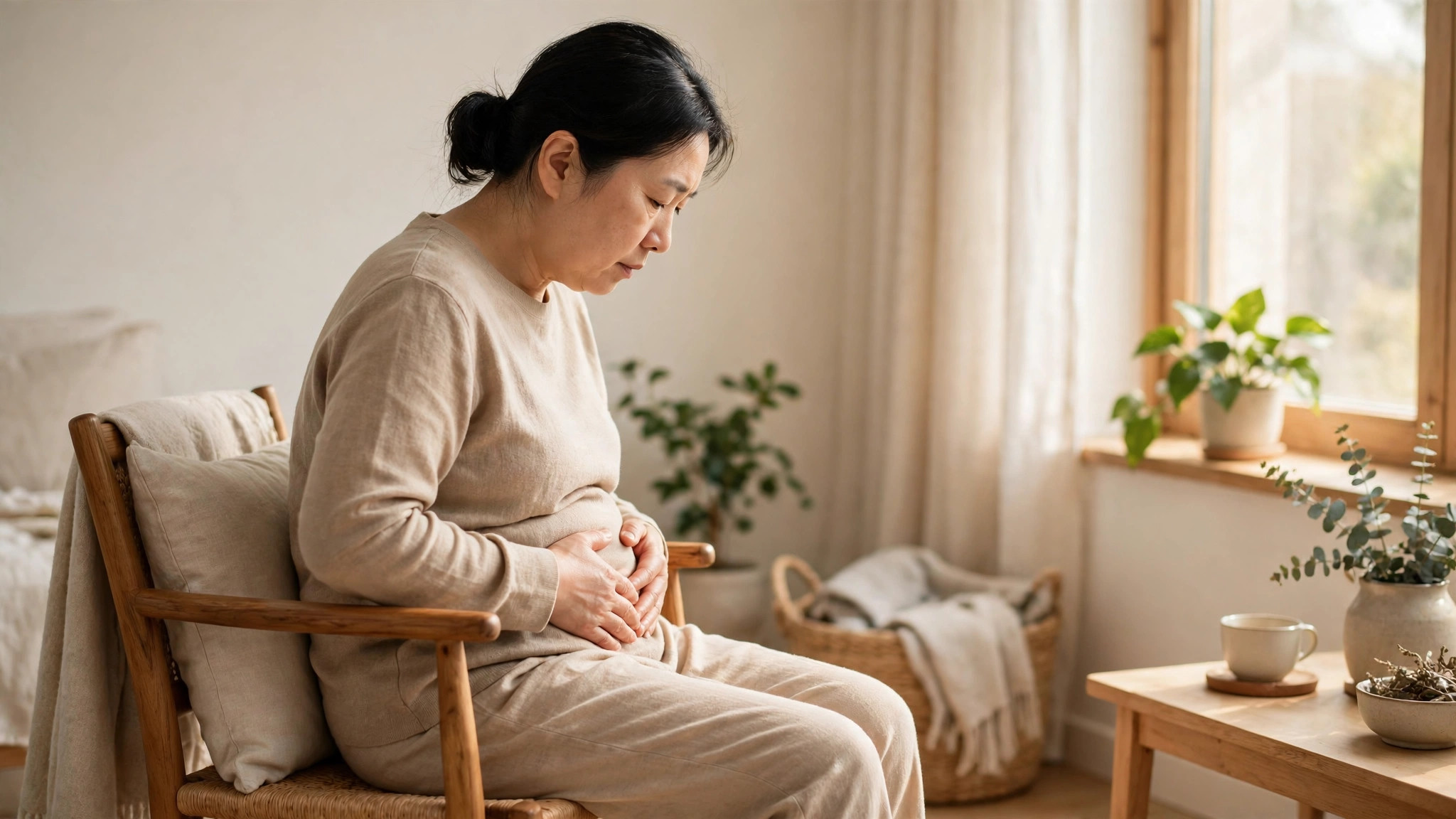
Dam-eum is not simply what people mean by "dam" when they say their shoulders feel knotted and stiff. Dam-eum is a pathological product that arises in the course of the body's fluid metabolism, and at the same time something that becomes a cause of disease. As the old saying goes, "of ten diseases, nine come from phlegm (痰)," and dam-eum is a representative pathological concept in Korean medicine, explained in connection with a very large number of conditions.담음은 단순히 '담 결리다'는 뜻만이 아닙니다. 담음은 인체의 수액 대사 과정에서 생기는 병리적인 산물이면서, 동시에 질병의 원인이 되는 것을 말합니다. 예로부터 "열 가지 병 중 아홉은 담(痰)에서 온다"는 말이 있을 정도로, 담음은 매우 많은 질환과 관련지어 설명되는 한의학의 대표적인 병리 개념입니다.
Nor does dam-eum refer only to visible phlegm. That it also includes the invisible pathological fluid that accumulates inside the body and obstructs circulation is the wisdom of the physicians of old, and a characteristic feature of Korean medicine. When we eat food, it passes through the digestive system and is transformed into nutritive substances, becoming the blood and body fluids that circulate throughout the whole body; dam-eum arises in the course of this process and impedes the circulation of qi and blood, giving rise to various symptoms such as phlegm, pain, and digestive disorders. Dam-eum is closely related to obesity and to constitutions in which the digestive system is inherently weak.담음은 눈에 보이는 가래만을 가리키는 것이 아닙니다. 몸속에 쌓여 순환을 방해하는 보이지 않는 병리적 수분까지 포함하는 것이 선현들의 지혜이며 한의학의 특징입니다. 우리가 음식을 먹으면 소화기관을 거쳐 영양물질로 변화하고, 전신으로 순환하는 혈액과 체액이 되는 일련의 과정에서 생겨나, 기혈의 순환을 저해하여 가래, 통증, 소화장애 등 여러 가지 증상을 일으키는 것으로 봅니다. 담음은 비만이나 체질적으로 소화기가 약한 경우와 연관이 깊습니다.
The organs related to the production of dam-eum are the spleen (脾), the lungs (肺), the kidneys (腎), and the triple burner (三焦), the pathway of fluids. This is because the spleen transports fluids, the lungs scatter fluids throughout the body, and the kidneys are the root of fluid metabolism.담음의 생성과 관련된 장부로는 비(脾), 폐(肺), 신(腎), 그리고 수액의 통로인 삼초(三焦)가 중요합니다. 비는 수분을 운반하고, 폐는 수분을 전신에 흩뿌리며, 신은 수분 대사의 근본이 되기 때문입니다.
The Types of Dam-eum담음의 종류
Dam-eum is classified as follows according to its cause and presentation.담음은 원인과 양상에 따라 다음과 같이 구분합니다.
Wind Phlegm (風痰) — Abnormal symptoms such as hemiplegia or dizziness appear, the chest feels stifled, and convulsions make the skin tremble.풍담(風痰) — 반신불수와 같은 이상 증상이나 어지럼증이 나타나고, 가슴이 답답하며, 경련이 일어나 살갗이 떨리는 증상을 보입니다.
Cold Phlegm (寒痰) — The bone joints feel numb, stiff, and sore, making the arms and legs hard to use; there is a stabbing pain with no feeling of heat, and cold energy closes in.한담(寒痰) — 뼈마디가 저리고 쑤시고 아파서 팔다리를 잘 쓸 수 없고, 찌르는 듯이 아프면서 열감은 없고 한기가 몰린 증상을 보입니다.
Damp Phlegm (濕痰) — The body feels heavy and without strength, languid and sluggish, and frail.습담(濕痰) — 몸이 무겁고 힘이 없으며, 노곤하고 나른하면서 허약한 증상을 보입니다.
Heat Phlegm (熱痰) — Intense feverish heat dries the phlegm into clumps; the head and face burn and flush, the eyes grow sore and weepy and the throat feels blocked, the pit of the stomach feels bitter and distressed, and the chest feels extremely stifled and pounds.열담(熱痰) — 열이 몹시 나서 담이 말라 뭉치고, 머리와 얼굴이 화끈거리며, 눈가가 짓물고 목이 메며, 명치 밑이 쓰리고 괴롭고, 가슴이 몹시 답답하고 두근거리는 증상을 보입니다.
Stagnant Phlegm (鬱痰) — When it has been pooled for a long time between the heart (心) and the lungs (肺), it clumps in the chest and turns thick, making it hard to spit out; the hair often becomes brittle, the face turns pale like dried bone, the throat and mouth feel dry, coughing appears, and the breath becomes very short.울담(鬱痰) — 심(心)과 폐(肺) 사이에 몰린 지 오래되어 가슴에 뭉치고 걸쭉해져 뱉기 힘들며, 머리털이 바스라지고 얼굴빛이 허옇게 되며, 목과 입이 마르고 기침이 나며 숨이 차는 증상을 보입니다.
Qi Phlegm (氣痰) — From mental stagnation, phlegm feels as though it blocks the throat — as if old cotton or a plum seed were lodged there — yet nothing comes out when one tries to spit it out, and nothing goes down when one swallows; the chest feels bloated and stifled.기담(氣痰) — 정신적인 울체로 목구멍에 담이 막혀, 헌 솜이나 매실씨 같은 것이 걸려 있는 것 같은데 뱉어도 나오지 않고 삼켜도 넘어가지 않으며, 가슴이 더부룩하고 답답한 증상을 보입니다.
Food Phlegm (食痰) — It arises when food is not digested well; when blood stasis (瘀血) is combined with it, lump-like masses may form, or the stomach feels full and bloated.식담(食痰) — 음식이 잘 소화되지 않아 생기며, 어혈(瘀血)이 겸하면 덩어리 같은 것이 생기거나 속이 그득하고 더부룩한 증상을 보입니다.
Alcohol Phlegm (酒痰) — It arises when alcohol is not digested, or when a lot of cold water is drunk after drinking; whenever the person drinks, they vomit the next day, food has no taste, and they bring up sour fluid.주담(酒痰) — 술이 소화되지 않았거나 술을 마신 뒤 찬물을 많이 마셔 생기며, 술만 마시면 다음 날 토하고 음식 맛이 없으며 신물을 토하는 증상을 보입니다.
Fright Phlegm (驚痰) — From a fright, phlegm clumps together and a lump forms in the chest or abdomen; when it flares, it throbs and hurts unbearably. It is said to occur often in women.경담(驚痰) — 놀란 일로 담이 뭉쳐 가슴이나 배에 덩어리가 생겼는데, 발작하면 툭툭 뛰면서 참을 수 없이 아픈 증상을 보이며, 부인에게 많이 생긴다고 합니다.
Besides these, cases in which the chest and back, the arms and legs, or the lower back suddenly ache dully and unbearably, and then the tendons and bones pull and ache, moving here and there with no fixed place, and cases in which lumps form in the upper, middle, or lower parts of the body (phlegm lumps, 痰塊), are also understood in connection with dam-eum.이 외에도 갑자기 가슴과 등, 팔과 다리, 허리가 은근히 참을 수 없이 아프다가 힘줄과 뼈가 당기며 일정한 곳 없이 여기저기 옮겨 다니며 아픈 경우, 몸의 상·중·하부에 멍울이 생기는 경우(담괴 痰塊) 등도 담음과 관련지어 봅니다.
Conditions in Which Dam-eum Forms Easily담음이 잘 생기는 조건
Dam-eum forms easily when one lives in a cold, damp place and much dampness collects in the body. It arises more readily when the function of the spleen and stomach, which are in charge of dampness metabolism, is weak, or when the yang energy of the kidneys (腎) is fundamentally insufficient. It also forms when one eats a great deal of sweet and greasy food, becomes obese, and the body can no longer cope with the dampness; and when qi becomes stagnated through mental strain, causing a disorder of fluid circulation, dam-eum also comes into being.담음은 춥고 습한 곳에서 생활하여 몸에 습기가 많이 차 있을 때 잘 생깁니다. 습기 대사를 맡는 비위의 기능이 약하거나, 근본적으로 신(腎)의 양기가 부족하면 더 잘 발생합니다. 달고 기름진 음식을 많이 먹어 비만해져 몸이 습기를 감당하지 못해도 생기고, 정신적으로 기가 울체되어 체액 순환에 장애가 생겨도 담음이 생기게 됩니다.
Symptoms by Body Area부위별 증상
As a general characteristic of dam-eum, the eyelids and the area below the eyes are said to look dark, like ash or soot. The symptoms appear differently depending on where it accumulates.담음의 일반적인 특징으로는 눈두덩과 눈 아래가 재나 그을음처럼 검게 보이는 것을 꼽습니다. 쌓이는 부위에 따라 증상이 다르게 나타납니다.
The liver (肝) area. The area below the ribs feels full, with a sensation of being pressed upward from below, and there is sneezing and pain.간(肝) 부위: 옆구리 밑이 그득하면서 밑에서 치받치는 느낌이 있고, 재채기가 나고 아픕니다.
The lungs and bronchi. Phlegm forms, or foamy saliva is spat up, and one frequently wants to drink water.폐와 기관지: 가래가 생기거나 거품 같은 침을 토하고, 물을 자주 마시려 합니다.
The spleen-stomach system. Digestion does not work well, the body swells and has no energy and feels heavy, the stomach always feels bloated, the bowels rumble with sounds, and the sides feel stiff and sore.비위 계통: 소화가 안 되고, 몸이 붓고 기운이 없으며 몸이 무겁고, 항상 속이 더부룩하고 배에서 꾸룩꾸룩 소리가 나며, 옆구리가 결리고 아픕니다.
The kidney (腎) area. It appears with symptoms such as a pounding sensation below the pit of the stomach.신(腎) 부위: 명치 밑이 두근거리는 등의 증상으로 나타납니다.
In this way, dam-eum is connected with the many symptoms through which internal lesions reveal themselves externally.이처럼 담음은 내부의 병변이 겉으로 드러나는 여러 증상과 관련됩니다.
Treatment Principles치료 원칙
In Korean medicine, the treatment of dam-eum takes as its principle addressing the cause that produced the dam-eum. Treatment is directed at restoring the function of the spleen and stomach so that fluids are transported properly and loosening accumulated damp-phlegm to help the circulation of qi and blood, and the treatment method differs according to constitution and symptoms. In daily life, reducing greasy and sweet foods, avoiding excessive drinking, and moving the body regularly can help prevent dam-eum from accumulating.한의학에서 담음의 치료는 담음이 생긴 원인을 다스리는 것을 원칙으로 합니다. 비위의 기능을 회복해 수분이 제대로 운반되게 하고, 쌓인 습담을 풀어 기혈 순환을 돕는 방향으로 치료하며, 체질과 증상에 따라 치료법을 달리합니다. 생활에서는 기름지고 단 음식을 줄이고, 과음을 피하며, 규칙적으로 몸을 움직이는 것이 담음이 쌓이는 것을 예방하는 데 도움이 됩니다.
However, among the symptoms explained as dam-eum, there are also cases in which another disease is the cause, so it is above all important to approach treatment through accurate diagnosis and examination.다만 담음으로 설명되는 증상 가운데는 다른 질환이 원인인 경우도 있으므로, 정확한 진단과 검사를 통해 치료에 임하는 것이 무엇보다 중요합니다.
Heavy, Bloated, and Full of Phlegm?몸이 무겁고 더부룩하며 가래가 잦으신가요?
Call us today to schedule your appointment.오늘 전화로 예약하세요.