Home홈 › Health Column건강 칼럼 › Hyperhidrosis다한증
Excessive Sweating (Hyperhidrosis): Korean-Medicine Treatment다한증의 한방 치료
October 23, 2026 · Tianjin Acupuncture2026년 10월 23일 · 천진 한의원
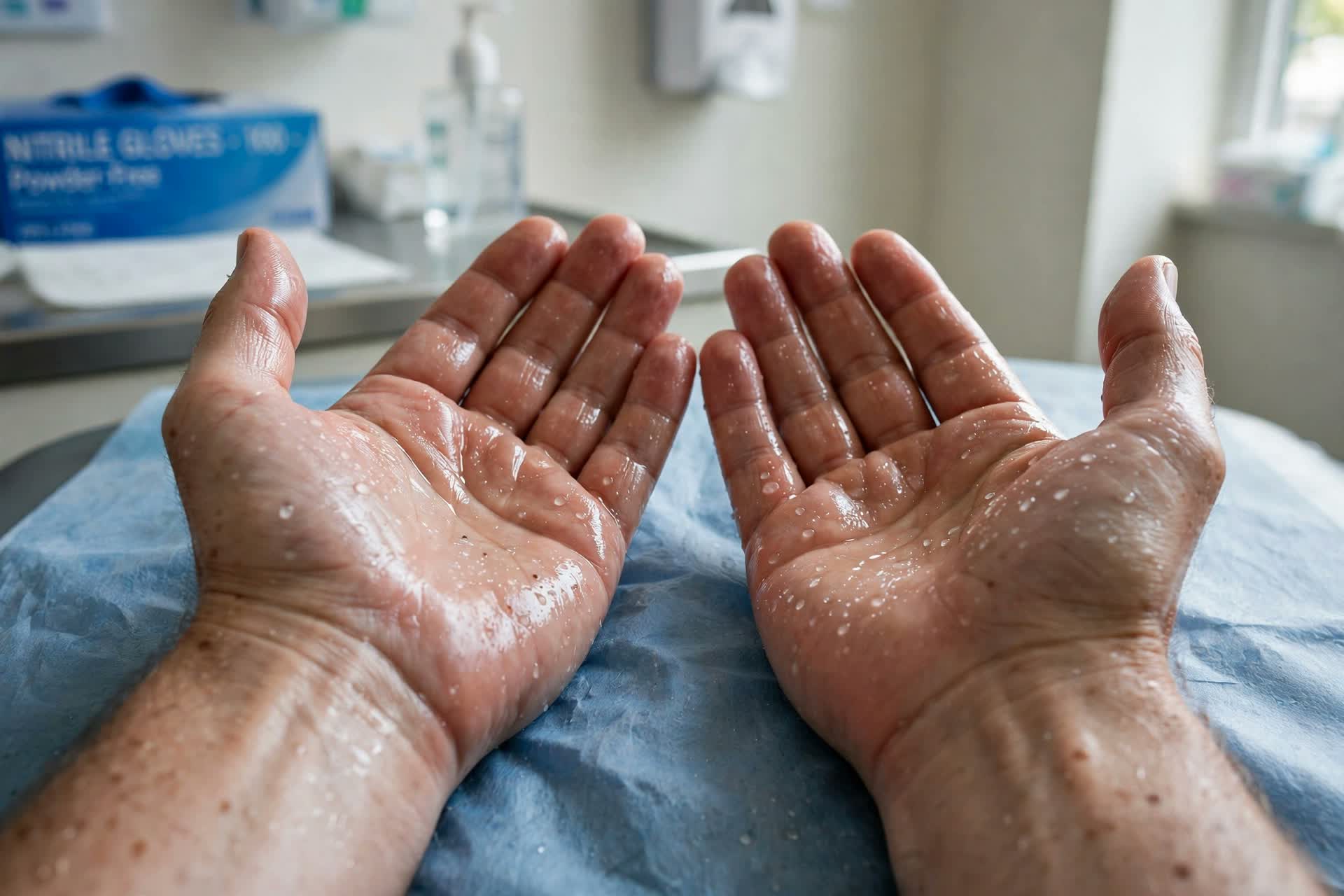
What Is Hyperhidrosis?다한증이란
A person normally sweats about 600–700 cc a day, and sweating tends to increase in hot weather, with labor or excessive exercise, or under mental tension. Hyperhidrosis is a state in which sweating — over the whole body or in parts — is heavy enough to interfere with daily life. If you feel light and refreshed after sweating, it is likely unrelated to health; but if you feel heavy, uncomfortable, and more tired after sweating, treatment may be needed. In the latter case, the sweating also drains the body's essential energy, further breaking its yin-yang balance.일반적으로 사람이 하루에 흘리는 땀의 양은 보통 600~700cc 정도이며, 무더운 시기나 노동·과도한 운동, 정신적 긴장이 있을 때 증가하는 경향이 있습니다. 다한증은 전신적으로, 혹은 부분적으로 땀의 양이 생활에 지장을 줄 만큼 많은 상태를 말합니다. 땀을 흘린 후 몸이 가볍고 상쾌하다면 건강과 무관한 경우로 볼 수 있지만, 땀을 흘린 후 몸이 무거워지거나 불쾌하고 더 피로하다면 치료가 필요한 경우로 봅니다. 후자는 땀과 함께 몸에 필요한 정기(精氣)까지 소모되어 몸의 음양 균형이 더 깨진 상태이기 때문입니다.
Types of Sweating in Korean Medicine한의학에서 보는 땀의 종류와 치료 방향
Korean medicine classifies sweating by when it occurs — spontaneous sweating (ja-han) and night sweating (do-han); by where it occurs — one-sided sweating, head sweating, chest sweating, hand-and-foot sweating, and forehead sweating; and by its nature — locked-in sweat, cold sweat, and sweating with meals — and sets the treatment direction accordingly.한의학에서는 땀을 흘리는 시간에 따라 자한(自汗)과 도한(盜汗)으로, 땀이 많이 나는 부위에 따라 편한(偏汗)·두한(頭汗)·심한(心汗)·수족한(手足汗)·액한(額汗)으로, 땀의 모양과 성질에 따라 절한(絶汗)·냉한(冷汗)·식후한출(食後汗出) 등으로 나누어 원인과 치료 방향을 정합니다.
Spontaneous sweating (ja-han) is excessive sweating during the active daytime hours, worse with exercise; it is seen as weak yang energy and treated in a direction that replenishes yang. Night sweating (do-han) is sweating unnoticed during sleep that stops on waking; it is seen as insufficient yin and treated in a direction that replenishes yin.자한(自汗)은 활동하는 낮 동안 땀을 과도하게 흘리고 운동하면 더 심해지는 것으로, 양기가 허약한 경우로 보아 양기를 보충하는 방향으로 치료합니다. 도한(盜汗)은 자는 동안 본인도 모르게 땀이 나고 잠에서 깨면 곧 멈추는 것으로, 음기가 부족한 경우로 보아 음기를 보충하는 방향으로 치료합니다.
One-sided sweating (pyeon-han) is sweating on only the right or left side of the body, often observed on the paralyzed side in stroke patients; the direction for replenishing qi and blood differs by side. Head sweating (du-han) is treated by smoothing the circulation of yang energy, and chest sweating (sim-han), with a stuffy, blocked feeling in the chest, by releasing the heat in the chest. Hand-and-foot sweating (sujok-han) — sweat only on the palms and soles, often enough to interfere with relationships and work — is treated by cooling the heat gathered in the stomach area. Sweating with meals (sikhu-hanchul) — pouring sweat during or right after eating — is also treated by cooling stomach heat. Cold sweat (naeng-han), from severe weakness or a sudden fright, is treated by calming the mind and nourishing the body.편한(偏汗)은 몸의 오른쪽 또는 왼쪽 한쪽에서만 땀이 나는 것으로, 주로 중풍 환자의 마비된 반신에서 관찰되며, 어느 쪽인지에 따라 기혈을 보하는 방향이 달라집니다. 두한(頭汗)은 땀이 머리에서만 나는 경우로 양기의 순환을 원활하게 하는 방향으로, 심한(心汗)은 심장 부위에 땀이 많이 나고 가슴이 답답하게 막히는 경우로 가슴의 열을 풀어 주는 방향으로 치료합니다. 수족한(手足汗)은 손바닥과 발바닥에만 유독 땀이 많아 대인관계와 업무에 지장을 주는 경우가 많은데, 위장 부위에 모인 열을 식혀 주는 방향으로 치료합니다. 식후한출(食後汗出)은 음식을 먹을 때나 먹은 후에 땀을 비 오듯 흘리는 것으로, 역시 위열을 식혀 주는 방향으로 치료합니다. 냉한(冷汗)은 심하게 허약하여 원기가 부족하거나 갑자기 크게 놀랐을 때 나는 땀으로, 마음을 편히 하고 몸을 보양하는 방향으로 치료합니다.
There are also warning signs. Heavy sweating only on the forehead with cold hands and feet (aek-han), or sweat that beads like pearls without flowing, accompanied by difficulty breathing and cold extremities (jeol-han), are danger signs that appear in critical illness — care for the underlying condition at a medical facility must come first.주의할 신호도 있습니다. 이마에만 땀이 대량으로 나면서 손발이 싸늘한 경우(액한), 땀이 구슬처럼 맺혀 흘러내리지 않으면서 호흡곤란과 손발 냉증이 동반되는 경우(절한)는 병증이 위중한 상태에서 나타나는 위험 신호이므로, 원인 질환에 대한 의료기관의 진료가 먼저 필요합니다.
Prevention and Daily Care예방과 생활 관리
When hyperhidrosis is related to a disease, living in line with that condition's treatment comes first. It tends to appear in people with higher body weight and in people with sensitive nerves. Body fat suppresses the conduction of body heat, so weight control — preventing fat accumulation and reducing damp-phlegm in the body — is important. People with sensitive nerves should limit caffeinated drinks such as coffee and black tea, which raise mental tension; simple exercises and deep breathing in cool air help release tension. Alcohol, which creates heat and damp-phlegm in the body, should be avoided, and high-calorie food and overeating should be limited.질병과 관련된 다한증은 그 질환의 치료에 맞추어 생활하는 것이 중요합니다. 다한증은 체중이 많이 나가는 경우와 신경이 예민한 경우에 나타나는 경향이 있습니다. 몸의 지방은 체열의 전도를 억제하므로, 체중 조절로 지방의 축적을 막고 몸 안의 습담을 줄이는 것이 중요합니다. 신경이 예민한 사람은 정신적 긴장을 일으키는 커피, 홍차 등 카페인이 든 음료를 절제하세요. 간단한 체조와 시원한 공기를 마시며 하는 심호흡이 긴장 완화에 도움이 됩니다. 술은 몸 안에 열과 습담을 만들므로 금하고, 고칼로리 음식과 과식을 삼가세요.
Before Relying on Folk Remedies민간요법에 의존하기 전에
A common folk remedy is to buy astragalus root (hwanggi) and drink it boiled. It can help spontaneous sweating, but as seen above, sweating has different causes by type and different treatment principles. Rather than relying vaguely on folk remedies, it is better to consult a Korean-medicine doctor and receive treatment matched to your type.땀이 많이 난다고 하면 민간요법으로 황기를 사서 달여 먹는 경우가 많습니다. 황기는 자한증에 도움이 될 수 있지만, 앞서 본 것처럼 땀은 종류에 따라 원인이 다르고 치료 원칙도 다릅니다. 막연히 민간요법에 의존하기보다 한의사와 충분히 상의하여 자신의 유형에 맞는 치료를 받는 것이 바람직합니다.
Sweating More Than You Should?땀이 너무 많아 불편하신가요?
Call us today to schedule your appointment.오늘 전화로 예약하세요.